By Colombe Cahen-Salvador
Imagine this: 193 people enter a great hall. One by one, they stand up and cast their votes. But here's the twist: out of all those 193 votes, only five people have the power to decide the outcome. It does not sound like democracy, does it? More like a plot twist from a political thriller. But this is not fiction, it is the reality within the United Nations. While 193 countries are told they have a say, it’s the five permanent members of the Security Council, who choose who the next United Nations Secretary-General will be. Democracy à la UN.
As world leaders gather this UN Day to celebrate human rights and multilateralism, a quieter ritual unfolds behind closed doors: the most undemocratic election on Earth. No campaigns, no debates that matter, no genuine vote - just backroom bargaining among the same five countries that have ruled since 1945.
Here’s how it really works. The UN Security Council’s five permanent members - the United States, China, Russia, France and the United Kingdom - each hold a veto over the appointment. They meet in secret, eliminate any candidate one of them dislikes, and when they finally agree, a single name is sent to the General Assembly for a ceremonial “approval.”
That’s it. The remaining 188 nations - and by extension, the six billion people they represent - simply rubber-stamp the outcome.
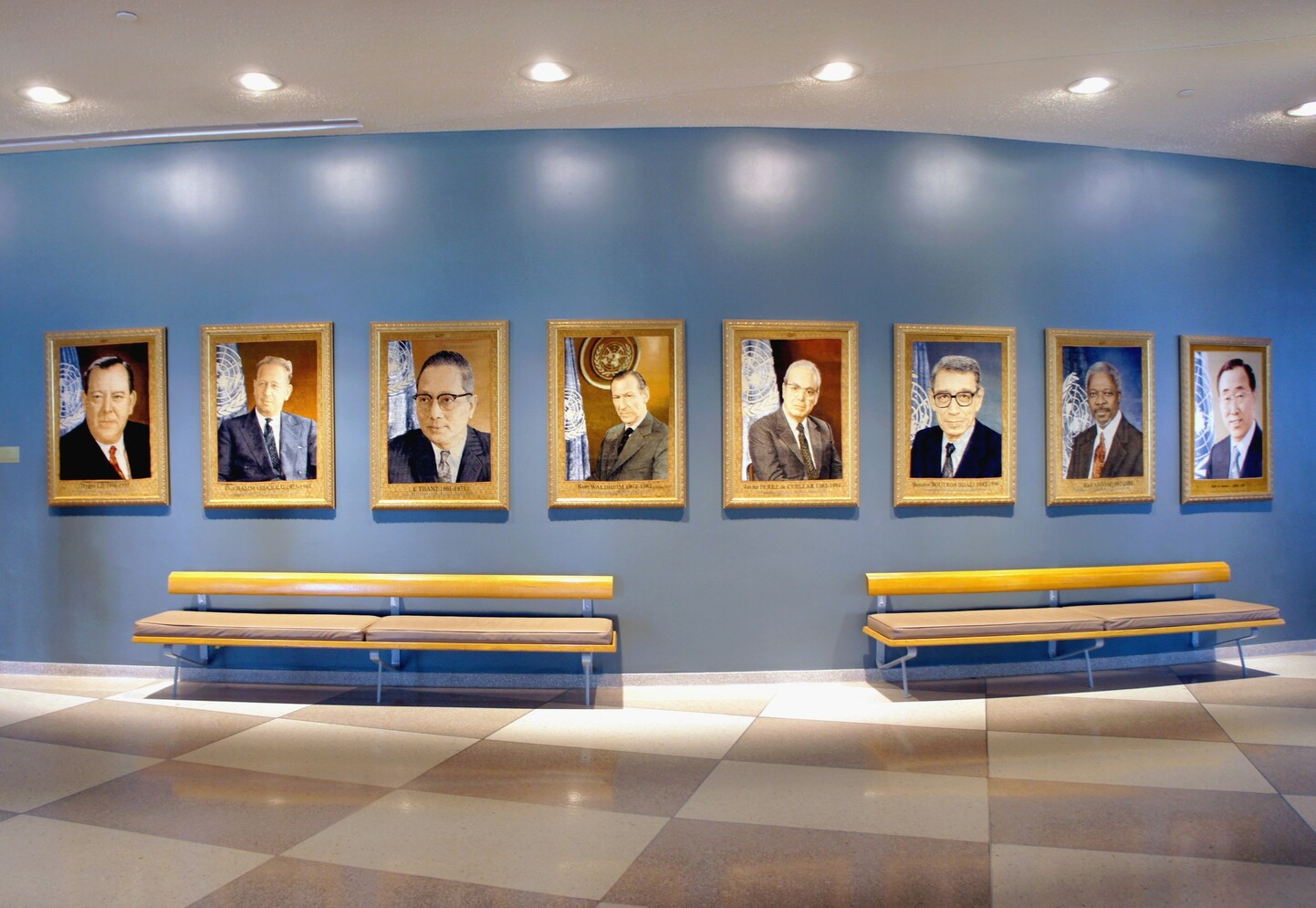
History offers no shortage of proof. In 1996, Washington vetoed Boutros Boutros-Ghali after he dared to act independently. In 2016, despite promises of reform and televised “hearings,” António Guterres was still picked in private by the P5. The world’s most universal institution still runs like an exclusive gentlemen’s club.
We often mock authoritarian regimes for holding fake elections. Yet in Moscow or Beijing, at least citizens see a ballot - even if the winner is pre-ordained. At the UN, the charade is more efficient: the world doesn’t even get to pretend. In Russia, voters receive a ballot without real alternatives to the status quo. In China, the Party Congress stages a scripted show of consensus. In New York, the international community receives a letter announcing that five men in five capitals have already made theirs.
The irony cuts deep. The same institution that preaches transparency and participation to others cannot bring itself to practise either within its own walls. Compared with these managed democracies, the UN process is even more cynical - it dispenses with the performance altogether.
This isn’t a procedural quirk; it shapes global politics. The Secretary-General is meant to be the world’s moral compass: mediating wars, defending human rights, and sounding the alarm on crises from Gaza to climate collapse. But when that person is chosen by five powers with conflicting agendas, and five powers responsible or complicit in many of today’s worst crimes, independence becomes impossible.
The result is a Secretary-General chosen not for vision or independence, but for compatibility with the interests of those five powers. The process rewards conformity, not conviction. It selects the person least likely to challenge the status quo - someone acceptable to the governments responsible for the crises the UN Chief is meant to solve. And after eight decades of speeches about equality, it has always rewarded a man.
After decades of criticism, reform briefly seemed possible, even if only cosmetic. In 2015, the General Assembly pledged to be guided by the principles of “transparency and inclusiveness” in selecting Secretary-Generals. Candidates could release vision statements and face civil-society questions. But when the decisive moment arrived, the door shut again. The 2016 process ended as before: secret ballots, backroom consensus, one pre-selected name put forward to the General Assembly. By 2021, even the pretences disappeared. Guterres was quietly reappointed without contest, without debate, and without a vote. This was despite many civil society organisations calling for changes, such as 1 for 8 billion, and my own launching a people-backed campaign to challenge the process.
If this happened in any country, the UN would condemn it as a violation of democratic rights. So why not apply its own standards to itself?
This democratic deficit is what led us today, at Atlas, to file a formal communication to the UN’s Special Procedures system. We're asking the United Nations Independent Expert on the Promotion of a Democratic and Equitable International Order to examine whether the Secretary-General selection process violates the right to equal and meaningful participation of states and peoples in global decision-making.
If you’ve never heard of the Special Procedures, you’re not alone. They are the UN’s system of independent human rights experts who investigate violations and advise on specific issues or countries. We decided to use the UN’s own accountability mechanism against itself — by asking the very expert responsible for these rights to review the organisation’s own practices. If he takes up our case, he can ask the UN to respond and then issue recommendations on how to uphold these rights. That’s the goal: for an independent UN-appointed expert to tell the organisation that it must reform its most undemocratic process and ensure that all states and peoples can participate meaningfully in choosing the next Secretary-General.
If citizens can denounce abuses of power within their own countries, they should be able to do the same within the institution that claims to represent them.
Eighty years after its founding, the UN still speaks of “We the Peoples” while silencing most of them.
As long as five men in five capitals decide who leads the world’s largest organisation, the global democracy deficit begins at the top. The next Secretary-General must be elected, not selected. Governments, civil society and citizens alike must demand a process that finally reflects the values the UN was created to defend.
Because humanity doesn’t need another secret coronation. It needs a leader chosen by the world, not by the few who already rule it.