2025 unfolded in a world that is becoming harder to recognise — and harder to justify.
Genocides are being committed in full view of the international community, without accountability and without consequences. International law is selectively applied, humanitarian principles are openly violated, and institutions created to prevent mass atrocities increasingly function as spectators rather than safeguards.
At the same time, three of the most powerful countries in the world - the United States, China, and Russia - are now ruled by autocratic or authoritarian leaderships, each in different forms, but all united by a growing contempt for democratic constraints, international norms, and human life when it stands in the way of power. The result is a global system where force increasingly replaces law, and where impunity is becoming the rule rather than the exception.
In this context, faith in institutions is collapsing — often for good reason. Yet the answer to this crisis does not lie in cynicism, withdrawal, or resignation.
The most hopeful signal of our time is coming from below.
Across continents, people are mobilising: protesting wars and occupations, resisting authoritarianism, defending labour rights, demanding dignity, and refusing to accept that violence and corruption are inevitable. These uprisings are often fragmented, local, and brutally repressed — but together they form the clearest counterweight to a world sliding into rule by force.
Atlas exists to bind these struggles together.
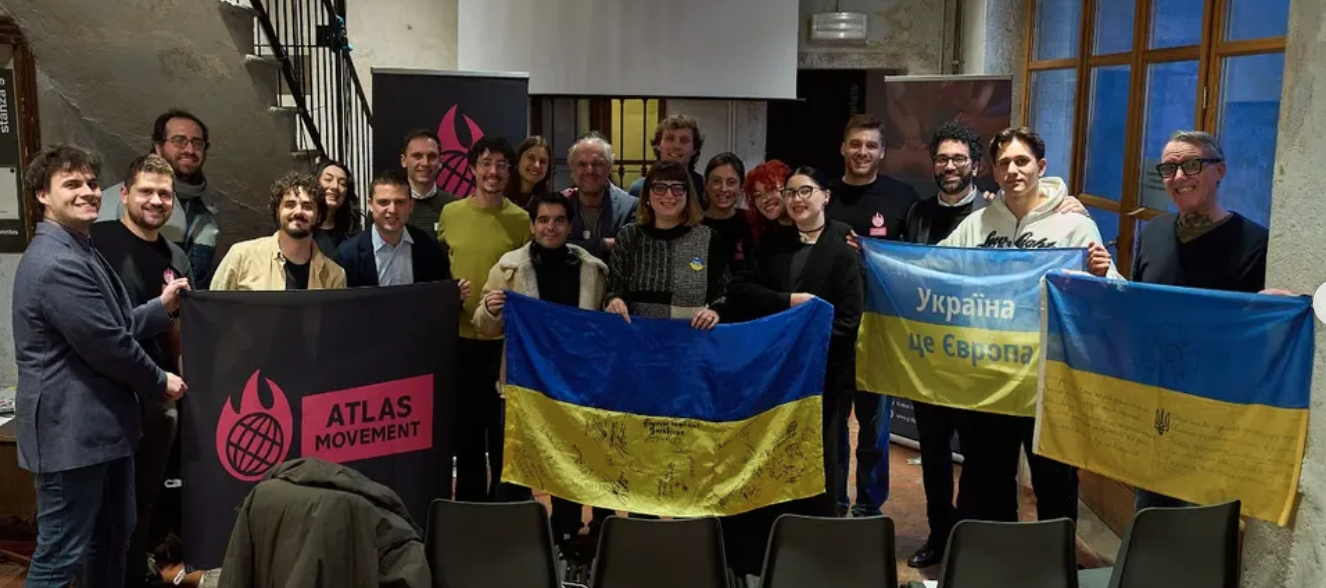
Our conviction is simple: isolated resistance is not enough. If people are to push back against authoritarian power, impunity, and systemic injustice, they must be organised — politically, strategically, and across borders. Atlas was created to help turn dispersed outrage into collective political power, capable of operating both inside and outside institutions.
2025 was a year in which this conviction was tested in practice. It was a year of transition — from ideas to proof, from resistance to political engagement, from critique to construction. This report documents how Atlas acted in this landscape, what we achieved, and why we believe the next phase is not only necessary, but possible.
The UN Secretary-General campaign: fighting to fix a broken system
In a world where global decisions increasingly determine the fate of millions, the way global power is exercised — and by whom — has never mattered more. Yet the United Nations, the institution meant to protect peace worldwide, failed to provide any answer to the genocide in Gaza or the conflicts in Sudan and Ukraine, or to secure any meaningful advancement on the struggle against climate change.
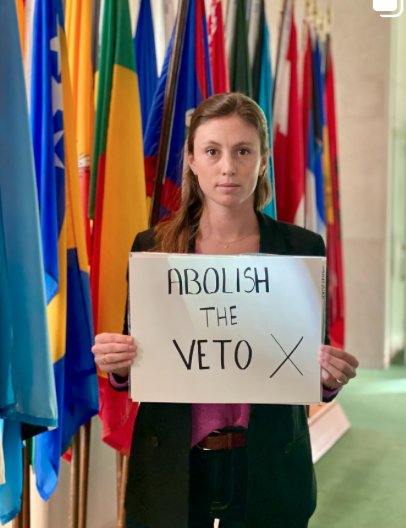
Throughout 2025, Atlas advanced its campaign to revolutionise the United Nations to give a fighting chance to humanity, focused on pushing our Secretary-General candidate Colombe Cahen-Salvador and the idea she champions as far as possible in the selection process that will end in September 2026. This process remains opaque, elite-driven, and closed to meaningful public participation - a democratic deficit that undermines the legitimacy of the entire multilateral system.
Beyond public advocacy and campaigning, Colombe and her team succeeded to:
- deliver a fully-fledge reform vision for the United Nations, our Survival Bill, approved by our members in our last General Assembly
- received broad media coverage, including in Fox News, and reaching millions on social media
- filing a Special Procedures request at the United Nations, formally denouncing the systematic exclusion of citizens from the UN Secretary-General selection process. This action challenged not only a procedural flaw, but a broader political logic in which global power is exercised without democratic consent.
- participate and present our proposals in high level fora such as the European Forum Alpbach (Austria), Arendalsuka in Norway, Boston University in the United States, and the European Committee of the Regions in Brussels.
Much more remains to be done in the final months of the campaign. Taken together, these efforts reinforced a central insight of Atlas’ strategy: global democracy, with a reformed UN or with new system if the UN fails, is the best shot we have to ensure dignity and peace to all human beings. Colombe, her team, and all our volunteers are ready to do anything possible to make this happen.
Electoral politics: a proof of concept in Italy
For the first time, Atlas stepped directly into electoral politics.
In 2025, Andrea Venzon ran as an independent candidate on behalf of Atlas within the Greens list in Veneto, one of Italy’s most conservative and far-right-leaning regions. Progressive candidates are structurally disadvantaged there and rarely elected.
The campaign was conducted without a team, without funding, and without institutional backing. Andrea started in the last position on the list and finished as the third most voted candidate.
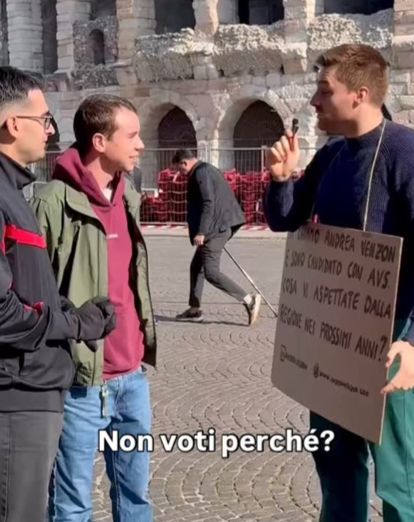
While this was not sufficient for election, the result constituted a powerful proof of concept. The campaign demonstrated that even in hostile political environments, there is demand for clear, courageous proposals — including:
-
an ambitious minimum wage grounded in dignity,
-
the closure of US military bases in the region in light of their role in supporting wars and mass atrocities,
-
and a public fund to protect workers displaced by artificial intelligence.
Thousands of conversations confirmed that Atlas’ message of dignity, rights, and accountability resonates far beyond traditional activist circles.
International solidarity: the Sumud flotilla
In 2025, thanks to the initiative of our Global Community Co-Lead Yassine, Atlas reaffirmed its commitment to direct international solidarity by participating in the Global Sumud Flotilla - a civilian-led international initiative aimed at challenging the blockade of Gaza and defending the principle that humanitarian access and solidarity are not crimes.
The Sumud Flotilla brought together activists, civil society organisations, and human rights defenders from multiple countries, united by a shared objective: to assert, through peaceful action, the right of civilians to receive aid and international protection in the face of genocide, collective punishment and prolonged siege. In a context where diplomatic and institutional mechanisms have repeatedly failed to protect civilians, the flotilla represented a form of nonviolent political pressure grounded in international law and moral responsibility.
During this initiative Yassine, on board of one of the vessels, was illegally detained and imprisoned by Israeli authorities. His detention highlighted once again the risks faced by those who challenge impunity and the increasing criminalisation of humanitarian and solidarity actions. Here you can see an introductory video, the video of the threats received by the Israeli authorities, and his last video ahead of the kidnapping.
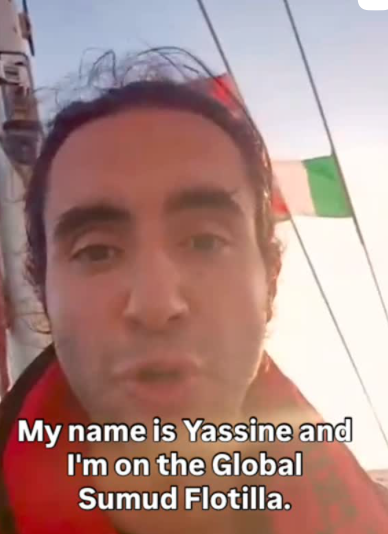
Atlas mobilised rapidly, raising funds to support Yassine’s legal costs and repatriation. In an act consistent with the values that motivated the flotilla itself, after being released Yassine chose to donate the funds raised to a Palestinian humanitarian organisation, redirecting solidarity toward those most affected by the blockade and ongoing violence.
This episode was painful, but it reaffirmed a central principle of Atlas’ work: solidarity is not symbolic. It requires presence, risk, and the willingness to act when institutions fail — and to stand by those who do so. Thanks Yassine for your courage, once more.
... and much, much more!
Beyond elections, institutional campaigns, and headline actions, 2025 was defined by countless acts of collective work that rarely make the news but form the backbone of any real political movement.
Throughout the year, Atlas’ voice was carried forward by volunteers, supporters, and organisers who dedicated time, skills, and energy to ensure that our message reached places where it is often excluded — from international institutions to streets, campuses, and local communities.
A central moment of this collective effort was the Freedom Marathon, an international conference organised by Atlas that brought together activists, researchers, policymakers, and Nobel Prize laureates to confront one of the defining political questions of our time:
how can we support people living under war, occupation, and systemic violence - from Gaza to Ukraine, and beyond?
The Freedom Marathon was not just an event. It was the result of months of coordination, volunteer labour, and political commitment, and it served as a space of convergence for struggles too often treated in isolation. It demonstrated Atlas’ capacity to convene, connect, and amplify voices that challenge war, repression, and impunity.
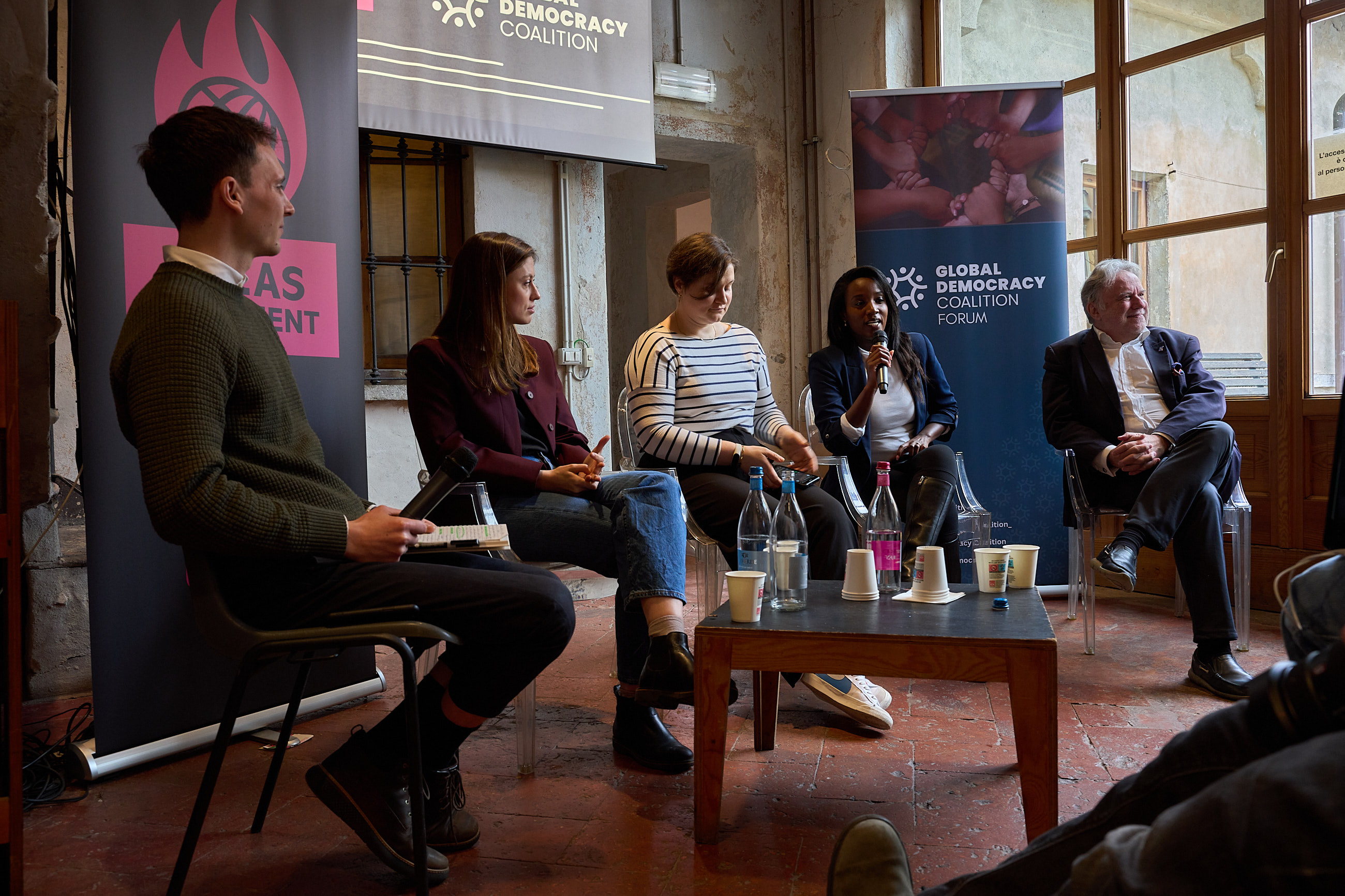
Beyond this flagship initiative, Atlas’ presence was felt across multiple arenas in 2025:
-
at UN gatherings and international forums, where volunteers helped amplify our positions, organise side events, and engage delegates and civil society;
-
in national and transnational protests, where Atlas banners, statements, and organisers stood alongside broader movements resisting war, authoritarianism, and abuses of power;
-
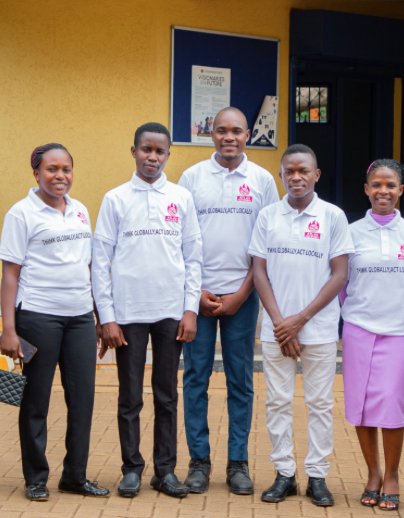
and within local communities, where members translated global demands into local conversations about dignity, labour rights, democracy, and solidarity.
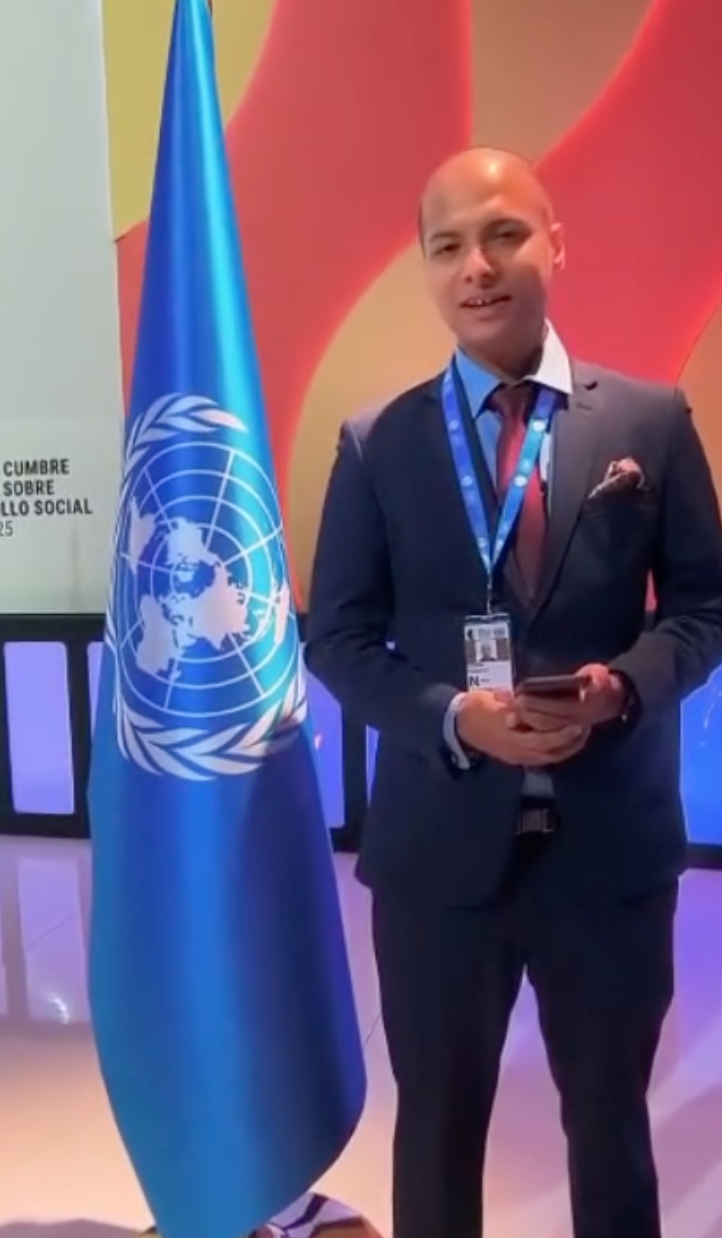
Much of this work happens quietly and without recognition. But taken together, it reflects something essential: Atlas is not a single campaign or a single spokesperson. It is a distributed political effort sustained by people who refuse to accept that silence is the price of realism.
In a year marked by institutional paralysis and moral collapse, this collective labour kept Atlas present, visible, and politically relevant — proving that even with limited resources, a committed movement can still shape the conversation.
Looking ahead: 2026 and the next phase of Atlas
2026 will not be a routine year for Atlas.
It will be a decisive turning point.
The work of 2025 made one thing clear: values alone are not enough. In a political landscape shaped by fear, disinformation, and concentration of power, people demand clarity, courage, and strength before they are willing to place their trust in a political project — especially at the national level.
Building on what we have learned, Atlas will enter 2026 with a renewed focus on sharpening its political message and expanding its impact, both nationally and internationally. Our values and policy foundations remain unchanged, but our articulation of them must become more direct, more legible, and more difficult to ignore.
One of the central political directions we are exploring is a clearer confrontation with abuses of power. This means naming and opposing corruption, injustice, the erosion of civil rights, and the growing reality that economic, political, and institutional power is increasingly exercised without accountability. These dynamics are global in nature, but they are lived daily at the national and local level — in workplaces, courts, borders, and streets. Addressing them is not a niche concern: it is a precondition for rebuilding trust in democracy itself.
More will be shared on this political direction in the coming months.
At the same time, Atlas is preparing a crucial internal transition. To meet the challenges ahead, the movement itself must embody the principles it defends. In 2026, we will take concrete steps toward building a more democratic, inclusive, and transparent governance structure — one that reflects Atlas as a truly plural political force.
This means opening leadership, sharing decision-making power, and giving members a real voice in shaping strategy, priorities, and direction. This transition will culminate in Atlas’ General Assembly in July 2026, where key proposals on governance and structure will be debated and decided collectively.
What happens next
We are ready to go.
In late January, we will share detailed updates on:
-
our renewed political positioning,
-
the preparations to get to our General Assembly,
-
and how you can be part of shaping Atlas’ future.
If you believe in what we are building and want to help make it real, this is the moment to step in. Join us as a member to be fully involved in this new phase
... and feel free to suggest the best city to host our next General Assembly ;)
Thank you for standing with us this year.
2026 will be challenging - but it will also be full of possibility.
Let’s build it together.
Colombe Cahen-Salvador & Andrea Venzon
Atlas Co-Founders
Atlas
Facebook | X | Instagram | Linkedin | Youtube | TikTok | Threads